

Do You Need a Licensed Drone Pilot? FAA Part 107 Explained for Businesses
What FAA Part 107 is, why commercial drone work legally requires it, what you risk by hiring an unlicensed pilot, and how to verify one in ten minutes.
By Kyle Romero, FAA Part 107 Remote Pilot
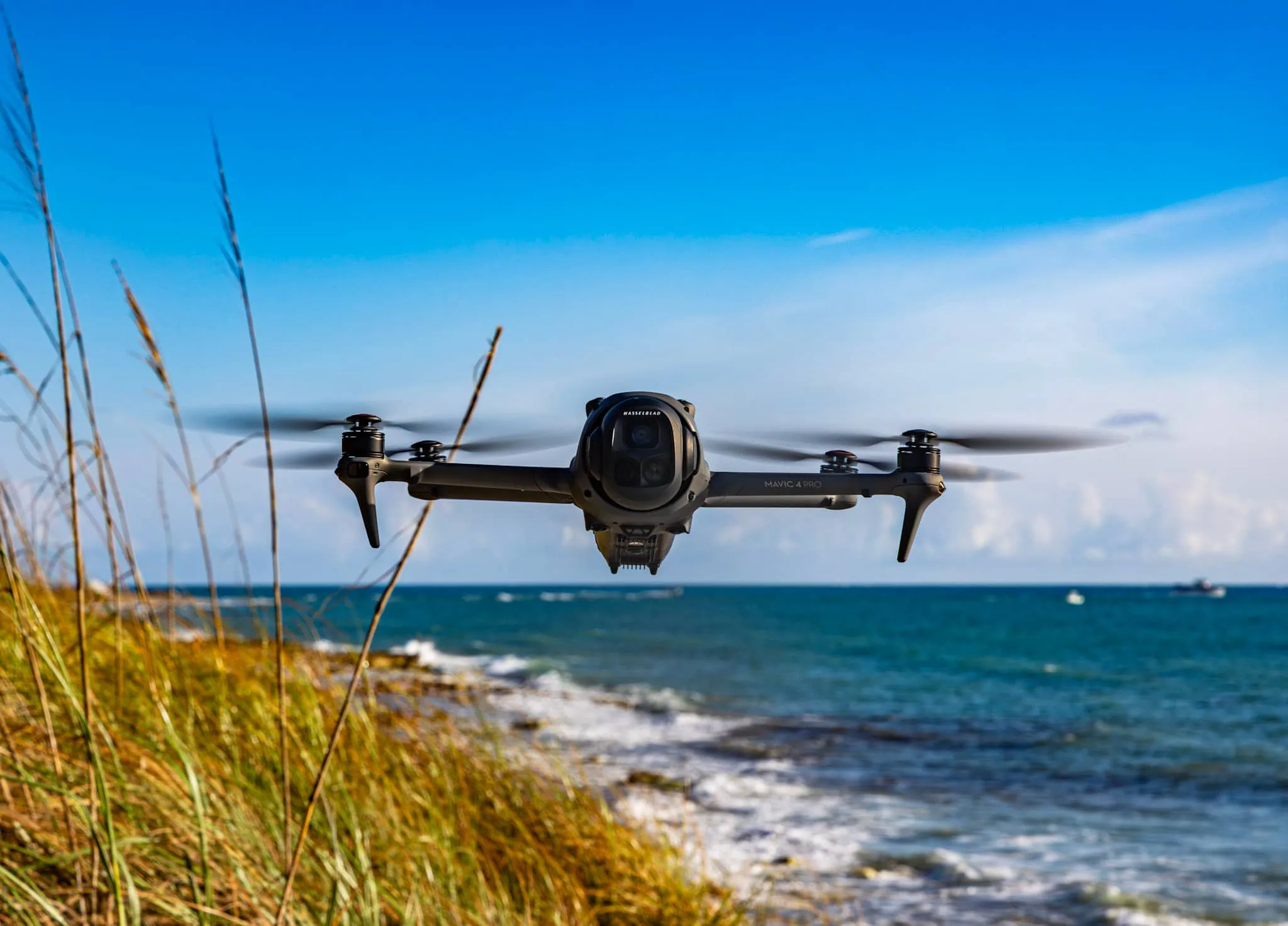
If you are paying someone to fly a drone for your business, the FAA treats that flight as regulated commercial activity. It does not matter whether the person at the controls is a full-time pro or a neighbor with a nice quadcopter. The moment a flight serves a business purpose, the rules change, and the operator is supposed to hold an FAA Remote Pilot Certificate under Part 107.
Most business owners we talk to in Jupiter and across Palm Beach County assume licensing is the pilot’s problem, not theirs. It is actually a shared one. When something goes wrong on an unlicensed flight, the fallout can land on the company that hired and benefited from the work. This guide covers what Part 107 actually is, why commercial drone work requires it, what you are exposed to if you skip it, and exactly how to verify a pilot before you book.
What Part 107 actually is
Part 107 is the section of federal aviation regulations governing the commercial use of small drones (under 55 pounds) in the United States. To fly a drone for any business purpose, the operator must hold a Remote Pilot Certificate, commonly called a “Part 107 license.”
Earning that certificate is not a formality. The pilot has to pass the FAA’s Unmanned Aircraft General (UAG) knowledge exam, a proctored test at an FAA-approved testing center covering airspace classification, weather, sectional charts, loading and performance, emergency procedures, and the regulations themselves. To stay current, the pilot must complete free online recurrent training every 24 calendar months. An operator whose currency has lapsed is not legal to fly commercially until they finish it.
The “commercial” trigger is broader than most people expect. You are in Part 107 territory if the drone footage is used to:
- Market a property, listing, business, or service
- Document a construction site or project
- Capture content for social media tied to a brand
- Inspect a roof, structure, or asset for a client
- Support any paid job or business outcome
The contrast is recreational flying, which falls under a separate, lighter set of rules. The instant money or a business purpose enters the picture, those recreational rules no longer apply. A wedding photographer who throws in some “free” drone shots, a contractor’s nephew filming the jobsite, a real estate agent flying their own drone over a listing: all of that is commercial use that requires a certificated remote pilot.
Hiring it out vs. having staff fly
Some businesses consider having an existing employee get certified rather than hiring a studio. That can make sense if drone work is constant and central to the operation. For most companies it is not the better deal. The employee still has to pass the exam, stay current, buy and maintain reliable aircraft, and learn airspace and authorization workflows. They also have to keep producing usable footage, which is a separate skill from flying legally. For occasional or seasonal needs, contracting a certificated operator who already owns the equipment and the experience is almost always cheaper and lower-risk than building that capability in-house.
Why hiring unlicensed is a real problem, not a technicality
It is tempting to treat the certificate as red tape, especially when the footage looks fine. But the certificate is a proxy for a set of competencies that protect you.
A certificated pilot understands airspace. Palm Beach County is busier overhead than it looks. There is controlled airspace tied to the area’s airports, and operating inside it requires authorization, usually through the FAA’s LAANC system, which provides near-instant clearance for approved flights in approved areas. An unlicensed flyer often does not know what airspace they are in, let alone how to request authorization. Flying without it near an airport is not a paperwork miss; it is a safety and federal-violation issue.
A certificated pilot also knows the operating rules that keep a flight legal: maintaining visual line of sight, staying at or below the 400-foot altitude limit, not flying over people who are not part of the operation without meeting specific requirements, and avoiding restricted areas. Those rules exist because a drone falling out of the sky over a sidewalk, a marina, or a crowded jobsite is a genuine hazard.
For a fuller picture of the day-to-day legal framework, our overview of drone photography laws every Florida business should know walks through the rules in detail. The hiring decision is where those rules become your responsibility too.
Why the certificate is your problem too
This is the part that should make any business owner pause.
If you hire an unlicensed pilot and something goes wrong, “I didn’t know they weren’t licensed” is a weak position. You engaged them to perform a regulated activity for your business, and you will own the reputational consequences if a flight near your property, listing, or event goes badly.
There is a practical dimension as well. An operator working without the certificate is, by definition, someone who decided the rules did not apply to them. That same judgment is what you are trusting when they fly a two-pound aircraft over a roof, a parked car, a boat, or a crowd on a patio. The certificate is not a guarantee of good flying, but it is evidence that the person has studied the airspace, the weather minimums and the operating limits, and has agreed to be accountable to them.
The other cost is quieter and more common than a crash: a flight that simply cannot happen. An uncertificated operator has no route to authorization in controlled airspace, so if your property sits under one of the shelves around the county’s airports, the job either gets flown illegally or does not get flown at all. Finding that out on shoot day, with a listing going live, is its own kind of expensive.
There is also enforcement. The FAA can pursue civil penalties for illegal commercial drone operations. Those penalties target the operator, but an investigation touching your project, your property, or your brand is not a place any business wants to be.
How to verify a drone pilot before you book
Vetting a pilot is quick. Here is a checklist you can run through in a single phone call or email exchange.
1. Ask to see the Remote Pilot Certificate
Request the actual FAA Remote Pilot Certificate. A legitimate pilot will not hesitate. It shows the holder’s name and a certificate number. If someone gets cagey or vague when you ask, that is your answer.
2. Confirm it is current
The certificate stays valid only with recurrent training completed every 24 calendar months. Ask when they last renewed. A professional tracks this and can tell you without scrambling.
3. Ask what they will not fly
The answer to this tells you more than any credential. An experienced operator has a list: sustained wind above their limit, rain, directly over people who are not part of the shoot, inside a restricted area, and any location where authorization was requested and refused. Someone who says they can fly anything, anywhere, any day is either inexperienced or planning to break a rule on your job.
4. Talk through airspace and authorization
Ask a plain question: “Do we need airspace authorization for this location, and how do you handle it?” A real Part 107 pilot will talk comfortably about checking the airspace, using LAANC for controlled areas, and what to do if a location sits under restricted airspace. A blank stare here is disqualifying. This matters near the Intracoastal, around marinas, and anywhere close to local airfields.
5. Ask how they handle people, property, and safety
A professional will mention maintaining visual line of sight, not flying directly over uninvolved people, having a plan for crowds and bystanders, and checking weather and wind before launch. Coastal flying near Jupiter, Jupiter Island, and Tequesta brings real wind and salt-air considerations that an experienced operator plans around.
6. Get it in writing
Make sure your agreement names the operator, references their certificate, and clarifies who is responsible for what. This is standard and protects both sides.
If a provider clears all six, you are working with a professional. If they stumble on the first two, keep looking. A studio that does this work properly treats certification as the baseline, not a bragging point.
What a legitimate flight day looks like
The vetting questions above are easier to read once you know what they are checking for. On a properly run shoot, the pilot confirms the location and airspace in advance, files for LAANC authorization if the site sits in controlled airspace, and checks the forecast and wind the morning of. On site, they do a quick visual inspection of the aircraft, set a launch and landing zone clear of people and traffic, and keep the drone in sight throughout. If conditions turn (gusts pick up, a crowd gathers, an aircraft passes nearby), they pause or reposition rather than push through. None of this is dramatic, and that is the point: a smooth, uneventful flight is what hiring a certificated pilot buys you.
What this means for common business scenarios
A few situations come up constantly in our market.
Real estate. Aerial and elevated shots are now expected on premium listings, but an agent flying their own drone over a property is doing commercial work and needs Part 107. Hiring a certificated pilot keeps the flight legal and tends to produce far better results. If you are weighing aerial for listings, our guide to real estate photography in Jupiter covers where drone work fits.
Construction. Progress documentation, site overviews, and marketing footage of an active jobsite all require a licensed pilot, and the stakes climb with equipment, crews, and structures in frame. An unlicensed flight over an occupied site is a serious exposure.
Yachts and waterfront. Shooting vessels near the water and around marinas combines airspace awareness with tricky flying conditions. This is exactly the kind of job where the certificate and the airspace training behind it earn their keep.
Local marketing and events. Any branded drone content, even a quick clip for social, is commercial use. The casual “my buddy has a drone” route is the one most likely to create an unlicensed-flight problem nobody noticed until it mattered.
The bottom line
Hiring a licensed Part 107 pilot is not about chasing a credential for its own sake. The certificate signals that the person flying over your property, your project, or your clients knows the airspace, follows the rules, and is accountable for the flight. Skipping it to save a little money quietly shifts real liability onto your business.
The vetting takes about ten minutes: see the certificate, confirm it is current, and ask how they handle airspace and safety. Any genuine professional welcomes the questions.
If you want aerial work done right in Jupiter and across Palm Beach County, get in touch and we will walk you through how we keep your project legal and looking its best.